
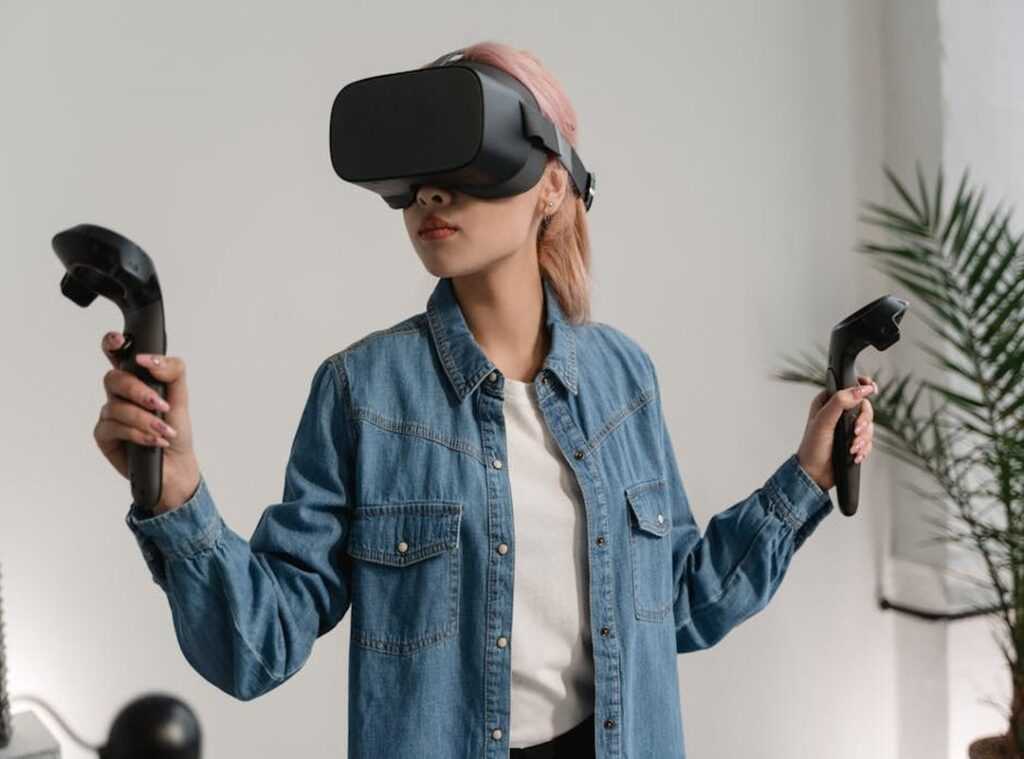
Virtual reality is mind-blowing right now, isn’t it? But deep down, we all know something even bigger is lurking just ahead. I come in.
I’m here to cut through the noise and lay down the VR gaming future takeaways you need. No hype, just the real deal.
I’ve been tracking gaming tech for years, filtering out the real breakthroughs from the fleeting fads. You want to know what’s next? I’ll tell you, but more importantly, I’ll explain why it matters.
This isn’t just about new gadgets or flashy graphics. It’s about redefining how we play and experience games.
By the end of this, you’ll know what’s coming but truly understand how it’s going to change your gaming world. Excited yet? You should be.
Trend #1: Hyper-Immersive Worlds You Can Truly Touch
VR gaming is about to get a lot more intense. We’re not just talking about better graphics. It’s all about “sensory fidelity” now.
Imagine a virtual world that feels as real as the one outside your window. Thanks to advancements in photorealistic rendering, light can filter through a dusty window you just opened. It’s not just about seeing it; you feel it.
Here’s a wild example: environmental physics. Picture yourself knocking over a stack of books. They don’t just fall.
They scatter differently every time, just like in real life. Water ripples and splashes with real-world accuracy. This is the future of gaming.
But wait, there’s more. Haptic feedback takes immersion to the next level. We’re talking full-body haptic suits and gloves.
You don’t just watch a battle. You feel the shockwave of an explosion. It’s like stepping into the screen.
Does this mean VR is the future of gaming? You bet. And it’s evolving fast.
These are the VR gaming future takeaways that are shaking up the scene.
As the tech grows, so do the experiences. With Cloud Gaming Changing Industry, accessibility is skyrocketing. If you’re not excited yet, you should be.
The virtual area is about to feel a lot more real.
The AI Revolution: Worlds That Think and Breathe
Let’s talk about NPCs for a moment. We’ve all seen them, those characters in games that feel more like cardboard cutouts than living beings. They spit out the same dialogue, follow predictable scripts, and honestly, they kill the vibe.
You want an immersive world, not one where every character is a broken record.
Now, imagine a world where NPCs do more than just stand there. Generative AI-powered NPCs are like having a conversation with a friend who remembers your last chat. These characters aren’t just running on scripts. They have unscripted conversations, changing goals, and can even remember past interactions with you.
Picture an AI shopkeeper who notices your new gear and offers a special deal because you were nice last week. That’s not just a game; it’s a new level of experience.
But it doesn’t stop there. The world itself can evolve. AI-driven procedural generation means the game world changes, ensuring no two playthroughs are the same.
It’s like exploring a new planet every time you log on. Exciting, right? It’s not just about playing; it’s about discovering.
All this leads to a future in gaming that’s both thrilling and unpredictable. These VR gaming future takeaways are reshaping how we engage with virtual worlds. It’s time for games that think and breathe, creating a space where anything feels possible.
Welcome to the revolution.
Cutting the Cord: Welcome to Wireless Wonderland
Ah, the early days of VR. Remember being tangled up in those irritating cables, physically tied to a hulking, expensive PC? It was like trying to dance with a ball and chain.
Those days are finally fading. Now we’re stepping into a world where wireless freedom reigns, thanks to strong standalone headsets like the Quest series. These devices have shattered the chains of the past, letting us explore without limitations.
No longer do you need a hefty PC to dive into VR. The next leap? Cloud Gaming for VR.
Imagine games being streamed straight to your delicate, feather-light headset. This means no solid local hardware is needed, yet you still get ultra-high-fidelity graphics. The future is here, and it’s pretty dazzling.
But let’s tackle the elephant in the room: latency. No one enjoys lag in the middle of an intense VR session. New tech like 5G and Wi-Fi 6E, paired with ‘edge computing’, are changing the game.
They make streamed VR nearly instant and super responsive. It’s like the lag was never even there.
Curious about how this ties into the cross platform multiplayer revolution? That’s another dimension of gaming’s bright future. With VR gaming future takeaways, it’s exciting to think about where we’re heading.
Are you ready to embrace this new era? It’s high time to cut the cord and dive into true VR freedom.
Your Eyes Are the Player: Biometrics in VR Gaming
Let’s talk about biometrics in VR. This isn’t science fiction. It’s happening, and it’s mind-blowing.

VR is getting more natural with eye-tracking. Imagine looking at a menu option and selecting it just by gazing. That’s foveated rendering at work.
It’s like magic but real life. Your VR world sharpens only where you’re looking. This saves power and boosts performance.
Who doesn’t want sharper graphics without a new computer?
Now, try considering how this transforms social VR. Your avatar’s eyes mirror yours. It’s eerie yet fantastic.
Suddenly, chatting in VR feels genuine. You see their reactions, a lot like real life. Have you ever had a conversation with a robot?
It’s awkward. This fixes that.
But there’s more coming. Facial expression tracking for avatars is next. Picture your in-game character smiling when you do.
It’s not here yet but soon. And let’s not forget brain-computer interfaces. Control games with just your thoughts.
It sounds like a sci-fi movie, right?
I see this as the future. It’s not just tech; it’s about bringing VR to life. Want more vr gaming future takeaways?
There’s going to be a lot more to obsess over, but we’re just scratching the surface with these biometric wonders. Are you ready to have your eyes do the talking? Because I sure am.
More Than a Game: The Social VR Revolution
Gaming isn’t just a lonely pursuit anymore. We’ve shifted from solitary pixels to lively social hubs. You’re not just in a game; you’re in a world.
This is the VR gaming future takeaways I’ve been waiting for. VR spaces have evolved from boring chat rooms to changing metaverses (yes, like something out of sci-fi). Here, you can build homes, own digital gear, and hang out with friends worldwide.
Imagine attending a live concert with pals from different time zones or catching a movie premiere in a virtual cinema. These shared experiences are game-changers. It’s about playing a game; it’s about being part of something bigger.
And that’s the exciting part. Who said gaming was antisocial?
The Next Level of VR Awaits
You’ve been searching for what’s next in VR, and your answers are right here. We’ve laid out a roadmap for the future of VR gaming. The core issue?
VR has seemed promising but unfinished. Not anymore. The trends we’ve discussed promise to make VR more immersive and intelligent than ever.
So, get ready. The VR gaming future takeaways we’ve shared are your key to unlocking new worlds. Stay tuned for more deep dives into gaming tech.
Get excited for the experiences coming your way. Visit hondingo88.com now to keep up with the latest in gaming trends.
 Louise Eppersonevida is the kind of writer who genuinely cannot publish something without checking it twice. Maybe three times. They came to core gaming mechanics and tips through years of hands-on work rather than theory, which means the things they writes about — Core Gaming Mechanics and Tips, Dingo-Level Game Tuning Techniques, Esports Strategy and Player Insights, among other areas — are things they has actually tested, questioned, and revised opinions on more than once.
That shows in the work. Louise's pieces tend to go a level deeper than most. Not in a way that becomes unreadable, but in a way that makes you realize you'd been missing something important. They has a habit of finding the detail that everybody else glosses over and making it the center of the story — which sounds simple, but takes a rare combination of curiosity and patience to pull off consistently. The writing never feels rushed. It feels like someone who sat with the subject long enough to actually understand it.
Outside of specific topics, what Louise cares about most is whether the reader walks away with something useful. Not impressed. Not entertained. Useful. That's a harder bar to clear than it sounds, and they clears it more often than not — which is why readers tend to remember Louise's articles long after they've forgotten the headline.
Louise Eppersonevida is the kind of writer who genuinely cannot publish something without checking it twice. Maybe three times. They came to core gaming mechanics and tips through years of hands-on work rather than theory, which means the things they writes about — Core Gaming Mechanics and Tips, Dingo-Level Game Tuning Techniques, Esports Strategy and Player Insights, among other areas — are things they has actually tested, questioned, and revised opinions on more than once.
That shows in the work. Louise's pieces tend to go a level deeper than most. Not in a way that becomes unreadable, but in a way that makes you realize you'd been missing something important. They has a habit of finding the detail that everybody else glosses over and making it the center of the story — which sounds simple, but takes a rare combination of curiosity and patience to pull off consistently. The writing never feels rushed. It feels like someone who sat with the subject long enough to actually understand it.
Outside of specific topics, what Louise cares about most is whether the reader walks away with something useful. Not impressed. Not entertained. Useful. That's a harder bar to clear than it sounds, and they clears it more often than not — which is why readers tend to remember Louise's articles long after they've forgotten the headline.