If you’re searching for ways to optimize pc for gaming fps, you’re likely tired of lag spikes, inconsistent frame rates, and hardware that isn’t performing the way it should. Whether you’re grinding ranked matches, exploring massive open worlds, or fine-tuning competitive settings, every frame matters. This article is built to give you clear, actionable strategies to boost performance without wasting time on outdated or generic advice.
We break down core gaming mechanics that impact FPS, smart system tweaks that actually work, dingo-level tuning techniques for squeezing out extra performance, and platform optimization hacks that serious players use. From graphics settings calibration to background process control and hardware-software balance, everything here is focused on measurable improvements.
Our recommendations are based on tested optimization methods, performance benchmarking practices, and real-world gaming scenarios—so you can expect practical steps that translate directly into smoother gameplay and higher, more stable FPS.
Stuttering, lag, and low frame rates ruin competitive matches, turning clutch moments into slideshow disasters. I’ve been there, and nothing tilts me faster. The good news? You can optimize pc for gaming fps without buying a new rig.
This guide delivers tested, dingo-level tuning techniques that actually work. We’ll cover:
- Driver updates and shader cache resets
- In-game setting triage for maximum frames
- Background process purges and power plan tweaks
Some argue hardware upgrades are the only fix. I disagree. Smart optimization often unlocks hidden performance. By the end, you’ll have a clear, practical checklist for smoother, faster, gameplay. Right now.
The Quick Wins: Essential Software Tweaks for Instant FPS Gains
By fine-tuning your PC settings for maximum FPS, you can enhance your gaming experience, which can be further elevated when you incorporate insights from Data-Driven Game Tuning Using Player Behavior Analytics.
If your frame rate feels like it’s moving in slow motion—cue the dramatic Zack Snyder cut—it’s time for the fastest fixes available.
Update Your Graphics Drivers
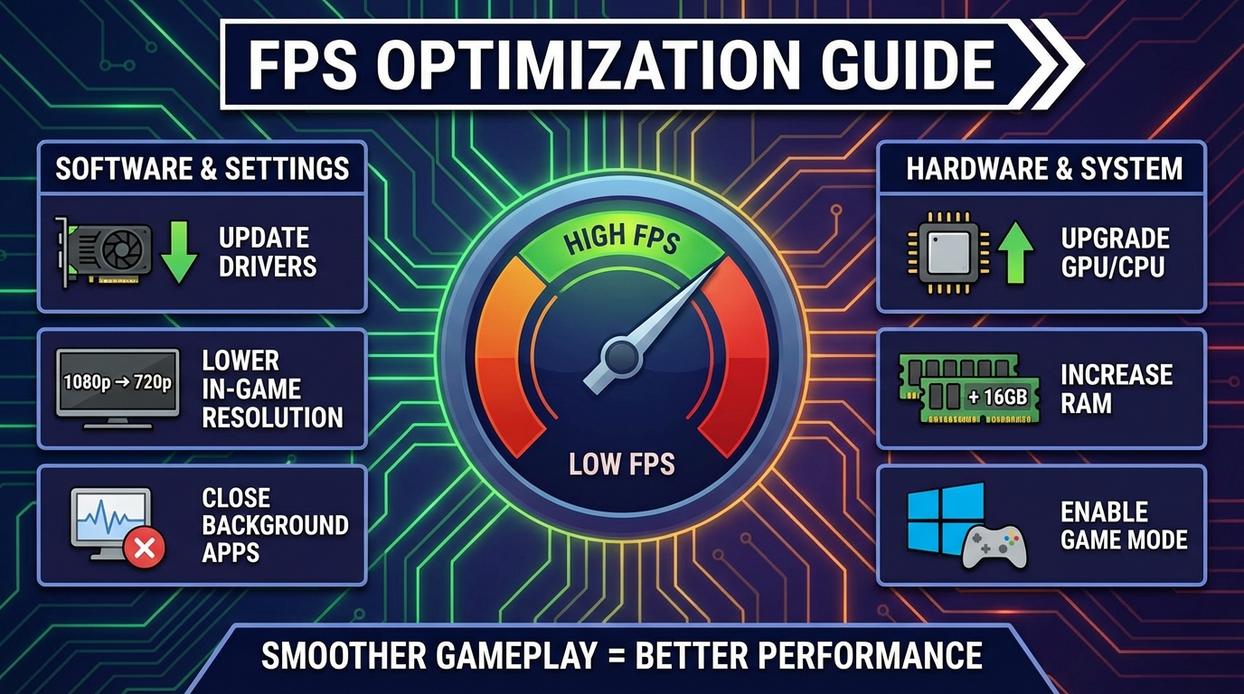
Your GPU (graphics processing unit—the component that renders images, animations, and video) runs on drivers. Think of drivers as translators between your game and your hardware. NVIDIA and AMD release frequent updates that patch bugs, improve optimization, and sometimes deliver double-digit performance boosts in new titles (NVIDIA Release Notes, 2024). Some players argue driver updates are “optional” if your game already runs fine. But skipping updates can mean missing critical performance profiles for new releases. Open GeForce Experience or AMD Adrenalin and install the latest stable version. It’s step one to optimize pc for gaming fps.
Optimize In-Game Settings (The FPS Hierarchy)
Not all settings hurt performance equally. Lower these in order:
- Shadows – Massive GPU drain (especially dynamic shadows).
- Anti-Aliasing – Smooths jagged edges but costs frames.
- Volumetric Effects – Fog, god rays, cinematic lighting (pretty, but pricey).
- Texture Quality – Impacts VRAM more than raw FPS.
Some purists insist on ultra settings for immersion. Fair—but stable FPS WINS GAMES. Even esports pros lower visuals for responsiveness (Steam Hardware Survey, 2024).
Activate Windows Game Mode
Game Mode prioritizes system resources for gaming and pauses background updates. Toggle it on in Windows Settings > Gaming. It’s not magic—but it helps.
Disable Overlays and Background Apps
Discord overlays, Chrome tabs, streaming apps—they all siphon CPU and RAM. Close them. Your PC isn’t an Avengers team-up; it doesn’t need everyone assembling at once.
Diving Deeper: Fine-Tuning Your System for Peak Performance
If you’re grinding ranked in Valorant on NA East servers or scrimming in Warzone with a Midwest squad, you already know: a few milliseconds can decide everything. Let’s dial in the settings that actually move the needle.
Configure Your GPU Control Panel
NVIDIA Control Panel (Right-click desktop → NVIDIA Control Panel):
- Low Latency Mode → Set to Ultra. This reduces the number of frames queued by the CPU before they’re rendered (frame queue = frames waiting in line to be processed).
- Power Management Mode → Prefer Maximum Performance. This prevents GPU downclocking mid-match (yes, that happens on Balanced).
- Texture Filtering – Quality → Set to High Performance. You may lose a touch of visual sharpness, but competitive players prioritize frame consistency over cinematic shadows.
For AMD Software: Adrenalin Edition:
- Enable Anti-Lag
- Set Texture Filtering Quality to Performance
- Adjust Power Tuning to favor performance profiles
Some argue max performance modes increase heat and wear. Fair. But modern GPUs are designed for sustained load. If you’ve invested in proper cooling, you’re leaving FPS on the table by playing conservative.
Adjust Windows Power Plan
Go to Control Panel → Power Options → Select High Performance (or enable Ultimate Performance via Command Prompt).
Balanced mode dynamically lowers CPU frequency. That’s great for office laptops. Not great for clutch moments in Apex.
Disable Unnecessary Startup Programs
Open Task Manager → Startup tab → Disable non-essential apps (Discord auto-launch is fine; five RGB utilities are not).
Every background process consumes RAM and CPU cycles. Small drains stack up.
Hardware-Accelerated GPU Scheduling
Settings → System → Display → Graphics → Enable Hardware-Accelerated GPU Scheduling.
This lets the GPU manage its own memory queue instead of relying solely on the CPU, reducing latency in certain DX12 titles.
If you’re serious about optimize pc for gaming fps, combine these tweaks with our full guide on reducing input lag across consoles and pcs.
(Pro tip: After every driver update, double-check these settings. Updates love resetting them.)
Advanced Tuning: Overclocking and Hardware Considerations
A Cautious Introduction to Overclocking
Overclocking means increasing your GPU’s core and memory clock speeds beyond factory settings to squeeze out “free” performance. Tools like MSI Afterburner make this surprisingly accessible. However, more speed also means more heat and potential instability. Start with small increments (10–20 MHz at a time), then stress-test with benchmarks like 3DMark or long gaming sessions. If you see crashes, artifacts (weird visual glitches), or driver resets, dial it back. Some argue overclocking isn’t worth the risk for a few extra frames. That’s fair—yet when done carefully, a stable 5–10% boost can be the difference between 55 FPS and a smooth 60.
The Impact of RAM Speed
Next, consider your RAM. Faster memory—say 3200MHz versus 2400MHz—can significantly improve FPS in CPU-bound scenarios, where the processor limits performance. This is especially noticeable in open-world or strategy games. Enable XMP (Extreme Memory Profile) on Intel or DOCP on AMD in your BIOS to run RAM at its advertised speed. Otherwise, it may default to slower settings (yes, even brand-new sticks). Pro tip: after enabling XMP/DOCP, verify stability with a memory test.
Identifying Your Bottleneck
Before upgrading, monitor CPU and GPU usage with an on-screen display like MSI Afterburner. If your GPU sits at 99–100%, it’s the bottleneck. If your CPU is maxed while GPU usage fluctuates, the processor is holding you back. This insight helps you optimize pc for gaming fps intelligently.
The Importance of Cooling
Finally, don’t ignore thermals. Thermal throttling—when components slow down due to heat—can quietly kill performance. Clean dust filters, ensure strong airflow, and consider better cooling if temperatures stay high.
From Stutter to Smooth: Maintaining Your High-Performance Rig
So here we are. You’ve gone from random frame drops (the horror) to a full toolkit of fixes, from driver updates to advanced tuning tweaks. Not bad. However, high FPS isn’t a one-and-done achievement badge—it’s more like brushing your teeth. Skip it too long, and things get ugly.
In other words, if you want to optimize pc for gaming fps, you’ve got to stay consistent. Clean your rig regularly, update drivers, and tweak settings when new games launch.
Sure, some players “set it and forget it.” Then they wonder why their gameplay feels like a slideshow. Instead, apply these steps methodically, balance for your hardware, and enjoy buttery-smooth domination.
Level Up Your Performance Today
You came here looking for real ways to sharpen your gameplay, boost consistency, and gain an edge that actually shows up when it matters. Now you understand how smart tuning, tighter mechanics, and strategic adjustments can dramatically impact your results.
Lag spikes, frame drops, and inconsistent performance aren’t just annoying — they cost you wins. When your system isn’t running at its peak, your skill can’t shine. That’s why learning how to optimize pc for gaming fps is one of the most powerful upgrades you can make. Smoother frames mean faster reactions, cleaner tracking, and more confident plays under pressure.
The next step is simple: apply these tuning techniques, refine your setup, and commit to consistent optimization. Don’t settle for average performance when you can unlock elite-level smoothness.
Gamers trust our proven strategies because they deliver real, measurable improvements. If you’re serious about climbing ranks, dominating lobbies, and eliminating performance bottlenecks, start implementing these optimization hacks today and turn your system into a competitive weapon.