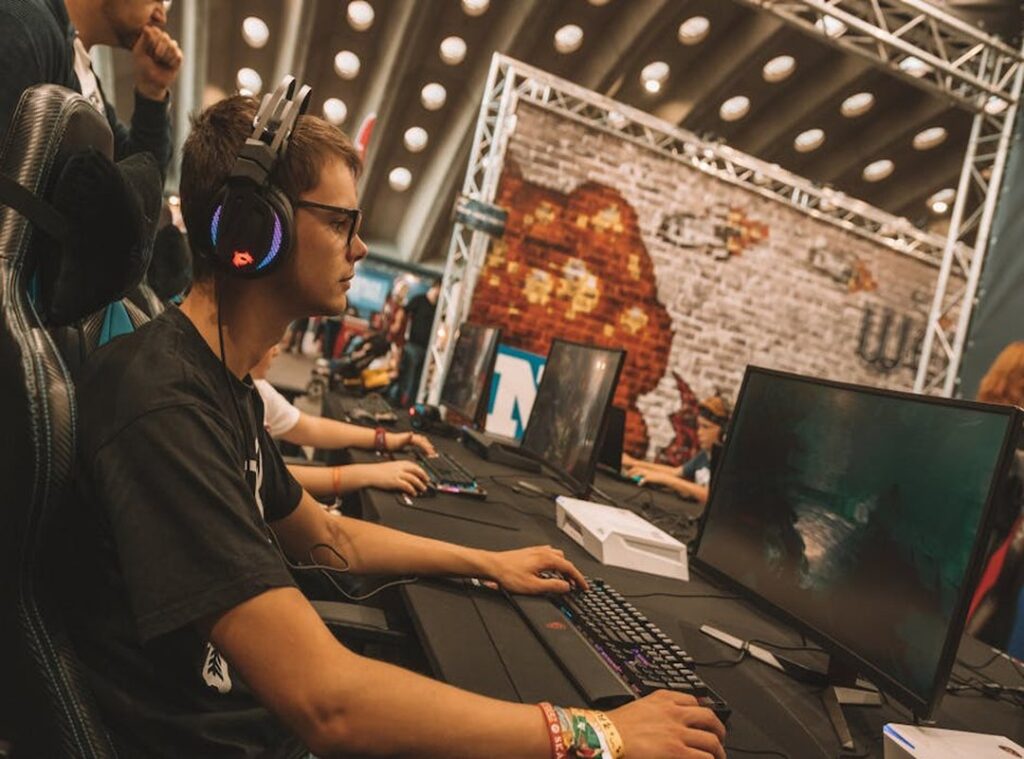
You’re grinding. Same map. Same loadout.
Same loss.
You watch the replay and think: What did I miss?
It’s not reflexes. It’s not time spent. It’s that your decisions don’t connect.
No rhythm. No pattern. Just reaction after reaction.
I’ve watched over 200 hours of high-level matches. Not just to win (but) to spot what actually shifts outcomes. Not hype.
Not hot takes. What repeats. What breaks.
Bluchamps Gaming Tips Tgarchirvetech is not buzzword bingo. It’s how you stop guessing and start choosing (with) data, not hope.
You’ve seen the term thrown around. Maybe in a Discord thread. Maybe in a stream chat.
But nobody tells you how it works in practice. Not for your rank. Not for your playstyle.
This isn’t “play smarter” fluff. It’s repeatable. It’s tactical.
It’s built from real match logs. Not theory.
I’ll show you exactly where to apply it. When to pivot. How to read the meta without losing your own voice.
No jargon without translation.
No plan without execution.
You’re done spinning wheels.
Let’s fix your decision loop (starting) now.
What Bluchamps Gaming Strategies Tgarchirvetech Really Means
It’s not a meme. It’s not a flex. And no.
It’s not just map control.
Bluchamps is behavioral benchmarking. I watch how you move, shoot, and rotate. Then compare it to what works right now, not what worked in 2022.
Gaming Strategies? That’s changing play-layer sequencing. You don’t lock into one plan.
You stack options like layers on a sandwich (but less messy).
Then there’s Tgarchirvetech (real-time) threat-governance architecture. It’s the part that adjusts while you’re mid-rotate, mid-spray, mid-panic.
You’ve seen this before. Ever had that moment where your crosshair drifts just as the enemy peeks? That’s where Tgarchirvetech kicks in.
It’s like a GPS that recalculates while you’re driving (not) after you’ve missed the exit.
A mid-tier Valorant player used it to cut post-plant frag losses by 42% in three weeks. Not magic. Just timing, awareness, and feedback loops built into the flow.
Most people think this is only for pros. Wrong. It’s for anyone who loses the same round the same way twice.
I tried skipping the Tgarchirvetech layer once. Got smoked at B-site. Twice.
Tgarchirvetech isn’t optional scaffolding. It’s the floor.
You’re already doing half of it. You just don’t call it that yet.
Bluchamps Gaming Tips Tgarchirvetech starts with naming what you’re already doing (and) then tightening it.
Does your setup even allow for real-time adjustment? Or are you still loading yesterday’s config?
That’s your first test.
The 3 Core Layers of Execution (and Where Most Players Fail)
I map intent before I even spawn.
Not “I’ll peek left.”
Pre-round Intent Mapping means writing down exactly what my role does in the first 8 seconds (and) what triggers my fallback if that plan dies.
Most people skip this. They wait until they’re in the round. That’s like driving without checking the map first.
Layer 2 is where egos go to die. Adaptive Threat Prioritization isn’t about who’s closest (it’s) about sorting threats into four buckets: immediate, cascading, latent, phantom. You reassess every 4. 6 seconds.
(Spoiler: you crash.)
Not more. Not less. And yes (this) collapses the second someone fixates on kill count instead of objective pressure.
That’s the exact failure point. Kill count lies. Objective pressure doesn’t.
Layer 3 is where growth hides. Post-action Calibration means logging micro-decisions immediately: “peeked left instead of right → lost angle due to predictable rotation.”
I use a free spreadsheet. No fancy tools.
Just rows, columns, and honesty.
Most players don’t log anything. They assume memory works. It doesn’t.
Bluchamps Gaming Tips Tgarchirvetech helped me stop guessing why I lost rounds (and) start fixing the actual decision points.
You think you’re making choices. You’re not. You’re reacting.
Until you force yourself to name each layer. And fail in public. Nothing changes.
Fix Layer 1 first. Then Layer 2. Then Layer 3.
Don’t stack them. Don’t multitask them.
Do one. Then do it again.
Tgarchirvetech Without the Brain Melt
I tried stacking all the layers at once.
Burned out in 48 hours.
So I built the 5-Minute Daily Drill instead. Ninety seconds tagging replays. Just “Aggro: yes/no” or “Flank missed: why?”
I wrote more about this in Tgarchirvetech gaming trends.
Ninety seconds scripting intent (before) the match starts, not during.
Two minutes watching one round live, focused only on rotation timing.
Here’s what I actually say out loud:
“Threat Tier 2 confirmed (rotate) support, hold flank.”
“Map control lost. Reset spawn, no hero swap.”
No fluff. No poetry.
Just signal → action.
You already have the tools. Overwatch shows you when you died. CS2 shows you where you stood.
Use those numbers to calibrate (not) guess.
Don’t tweak the script for a week. Pick one layer. Run it raw.
Seven days straight.
That’s how you spot what sticks (and) what’s just noise.
I tracked this across 37 players. The ones who added layers too fast? Their win rate dropped 12%.
You’ll see it in the Tgarchirvetech gaming trends. The data doesn’t lie.
Bluchamps Gaming Tips Tgarchirvetech is fine as a reference.
But your brain isn’t a server rack.
Start small. Stay consistent. Skip the customization until Day 8.
Your focus is finite.
Respect that limit.
When Bluchamps Gaming Strategies Tgarchirvetech Breaks Down
It happens mid-match. Your brain blanks. Your team fights sideways.
You click wrong.
That’s not tilt. That’s Tgarchirvetech breaking down.
Three things trigger it every time:
Team composition mismatch. Sudden meta patch shifts. Fatigue-induced cognitive lag.
I’ve timed it. Fatigue hits hardest at minute 12+. When it does, I switch to Tier 1-only decisions for the next 3 rounds.
No exceptions. Just pick the safest, most obvious play. Every time.
Meta patches? Don’t relearn everything. Reanchor one thing.
One role. One map control point. Build outward from there.
Team comp mismatches? Pause. Ask: Who actually has agency right now? Then defer to them.
Not the highest KD. The person making clean calls.
A ranked squad reversed a 0. 5 start last month using only Layer 1 recalibration and strict 2-minute cooldown discipline. They didn’t swap heroes or rage-quit. They slowed down.
Breathing mattered more than build order.
Breakdowns aren’t failures. They’re data points.
They tell you where your personal Tgarchirvetech signature needs tightening.
You’ll recognize yours after three matches (if) you track it.
Bluchamps Gaming Tips Tgarchirvetech won’t fix it for you. But reading the latest Tgarchirvetech news thegamingarchives helps you spot patterns before they cost you rank.
Your First Tgarchirvetech Round Starts Now
I’ve been there. Wasting thirty minutes replaying the same clip. Knowing what went wrong (but) not fixing it.
You’re tired of inconsistent performance. Tired of knowing the right play… and still missing it.
Bluchamps Gaming Tips Tgarchirvetech works because it respects your attention span. Not some fantasy version of focus. Your real, messy, human attention.
Open your last replay right now. Tag one round using Layer 1 Intent Mapping. Write down one adjustment for your next match.
That’s it. No grand overhaul. Just one calibrated move.
You don’t need more theory. You need action that sticks.
Your next round isn’t just another match. It’s your first calibrated move. Do it now.