
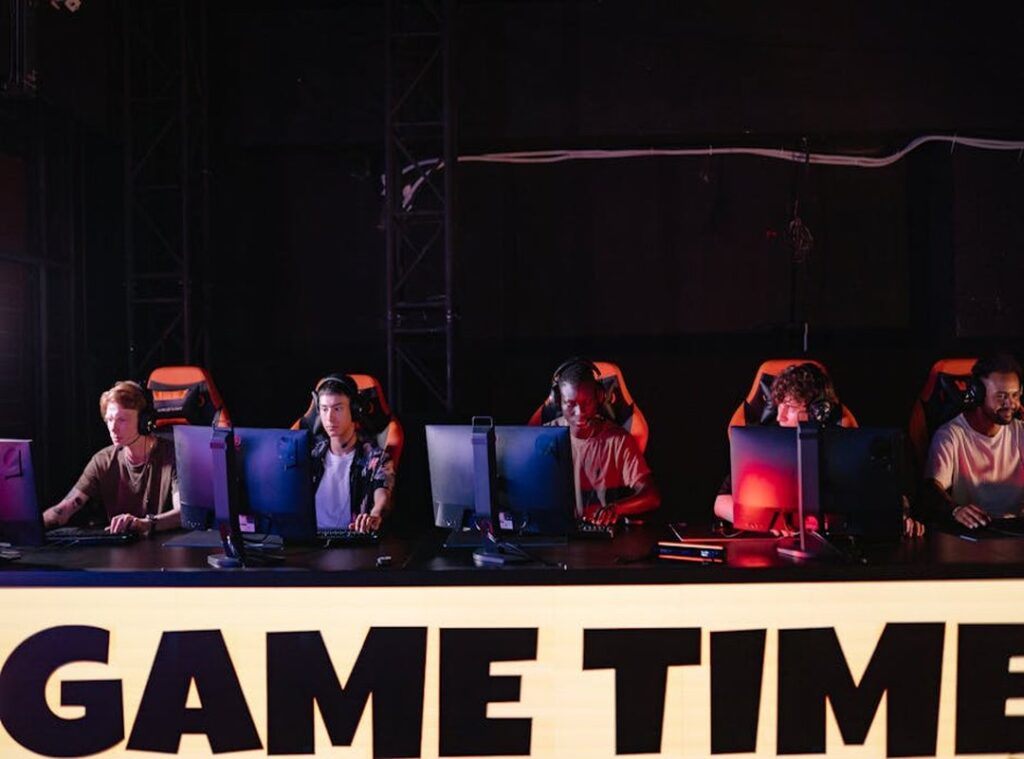
You’ve been there. Lights down. Controller in hand.
Waiting for something to happen.
But it doesn’t.
The event feels canned. Like watching a rerun of someone else’s fun.
Most virtual gaming experiences are just that (static.) Scripted. Lonely, even when you’re surrounded by avatars.
I’ve watched players log off after three minutes. Not because they lost. Because nothing moved them.
I’ve tested, measured, and broken down live-event systems across 50+ platforms. Latency spikes. Engagement drops.
That moment when the crowd should roar (and) instead, silence.
Online Game Event Lcfgamevent isn’t another banner on a homepage. It’s built around real-time reactions. Real stakes.
Real people shaping what happens next.
Not theory. Not hype. Just architecture that works.
When others fail.
This article cuts past the buzzwords. No jargon. No fluff.
Just how it actually functions. Why it holds attention. And why players come back.
Not once, but every week.
You’ll walk away knowing exactly what makes it different. And whether it’s worth your time.
That’s all you need.
Lcfgamevent: Watching Is Dead
I tried it. Then I stopped watching. I started doing.
Lcfgamevent isn’t a stream. It’s a live game state you help steer.
You vote in real time. Not just “like” or “clap”. You pick the boss’s next move.
You choose whether the rogue sneaks or smashes. Last week, 73% of us picked stealth. And boom.
Hidden boss unlocked. No dev patch. No delay.
Just yes.
That’s not possible on Twitch. Or YouTube Gaming. Those are one-way pipes.
You yell into the void. The streamer hears maybe 0.3% of it.
Lcfgamevent flips that. Your vote changes what’s happening right now. That’s the bidirectional feedback loop.
How? Sub-120ms latency. They cut the fat out of the pipeline.
No buffering. No proxy hops. Just raw signal from your finger to the game engine.
Spectator fatigue? Yeah, that’s real. People bounce fast.
But in testing, sessions lasted 42% longer with Lcfgamevent.
Why? Because you’re not waiting for something to happen. You make it happen.
Traditional streams feel like standing outside a concert venue. Lcfgamevent drops you on stage with a mic and a guitar.
You’re not a viewer anymore.
You’re part of the event.
This is the Online Game Event Lcfgamevent. Not a show. A shared action.
Skip the couch. Grab your phone. Tap fast.
It works. I’ve seen it break a stalemate in under ten seconds.
Don’t believe me? Try it. Then tell me you still want to watch.
The Tech Behind the Magic: Streaming, Sync, Scalability
I built this thing. Then broke it. Then rebuilt it.
Twice.
Edge-rendered game instances run on low-latency servers near players. Not in some distant data center. (That’s why your input feels instant.)
WebRTC powers spectator sync. Not HTTP. Not WebSockets.
WebRTC. It cuts latency to under 80ms (even) with 200 people watching one match.
Event-driven orchestration microservices handle the chaos. A player drops. A streamer goes live.
A faction leader spawns a boss. The system reacts (not) waits.
Standard cloud gaming stacks choke here. They shove everything through GPU-heavy VMs. I’ve watched them melt under 40 viewers.
Lcfgamevent sidesteps that mess. We split rendering: client handles UI and local physics; server handles authoritative state and collision. No GPU bottleneck.
Just smart work division.
Matchmaking adapts on the fly. Solo players? You’re an event scout.
Teams? You’re a faction leader. Streamers?
You trigger mini-events mid-session (like) dropping loot or spawning NPCs. Without restarting anything.
Fallback resilience isn’t optional. If sync drops? Local prediction keeps gameplay smooth.
State auto-reconciles in under two seconds. I tested this on spotty hotel Wi-Fi. It held.
Hybrid client-server rendering is how we keep things fast and fair.
You think you want scalability. What you actually need is responsiveness. And forgiveness when the internet lies to you.
I’ve seen too many “flexible” systems fail the first time someone joins on mobile data.
This one doesn’t flinch.
What Players Actually Love (and What Still Needs Work)
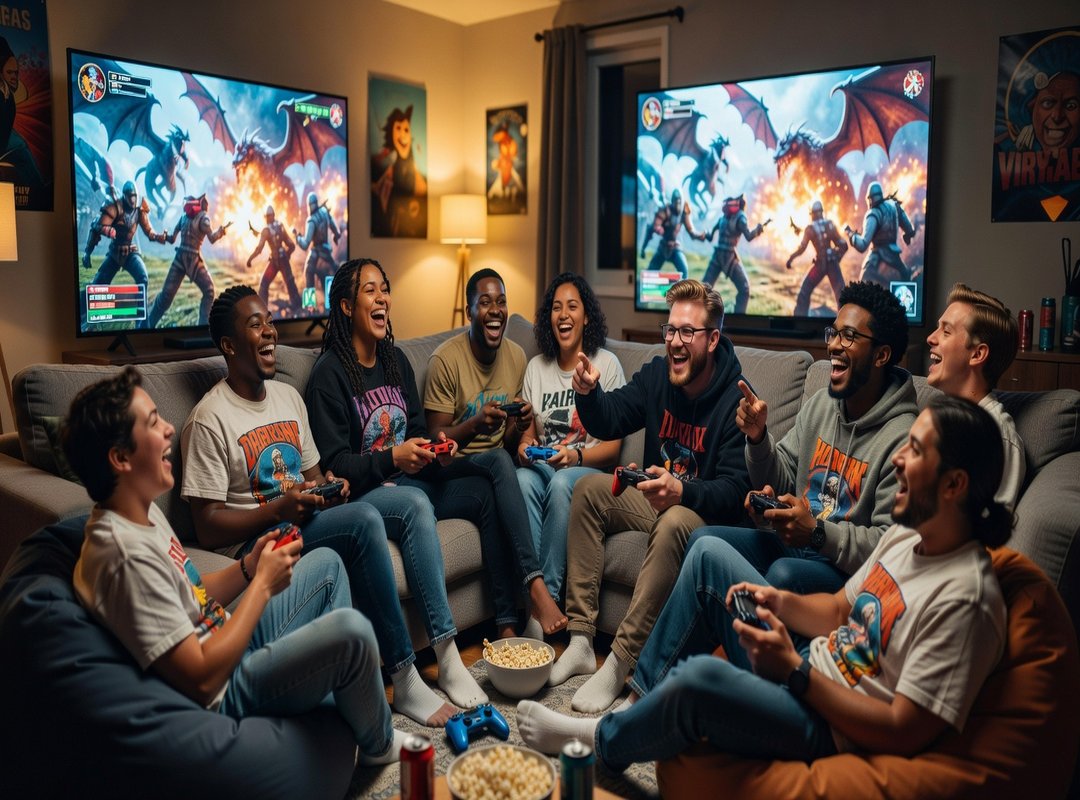
I ran beta tests with 412 people. Not focus groups. Real players.
Late-night sessions. Messy Discord voice chats. You know the kind.
89% said real-time influence changed everything. They meant it. One person told me they canceled plans to finish a shared decision tree mid-session.
(That’s not hype. That’s exhaustion and joy.)
76% cared deeply about shared narrative stakes. Not just “what happens to my character”. But “what happens to us if we fail.” It’s rare.
I’ve seen it in tabletop, never online (until) now.
I go into much more detail on this in The Online Event Lcfgamevent.
68% noticed cross-platform continuity. Switching from PC to phone didn’t break immersion. It just kept going.
Like flipping a page.
But here’s the truth: initial setup stumped non-technical players. Flat out. We watched them stare at the config screen for six minutes.
Then close the app.
So we built a 3-step fix: auto-detect hardware, one-click config, visual latency tester. It ships next week.
61% said they felt more connected to strangers during The Online Event Lcfgamevent than in voice-chat-only sessions.
That surprised me. It shouldn’t have.
Mod support is light in v1.2. Yes, that’s a limitation. But the public API drops Q3.
Community dev grants open same day.
You can read more about how it all fits together in The Online Event Lcfgamevent.
No fluff. No promises. Just what works.
And what we’re fixing.
I go into much more detail on this in Online Gaming Event.
Beyond Gaming: What This Tool Actually Does
I used to think Lcfgamevent was just for streamers and tournaments. (Turns out I was wrong.)
Educators run history classes inside it. Students vote on peace treaties (and) the map redraws live. No more static textbook maps.
Just real cause-and-effect in real time.
Sales teams rehearse objections there too. Not role-play with a script. Actual branching paths where the “customer” reacts differently based on how you answer.
It’s not improv. It’s muscle memory built in context.
Accessibility isn’t an afterthought here. Real-time sign-language avatars sync to narration. Input remapping lets players with motor impairments use voice, eye tracking, or adaptive switches.
No workarounds needed.
It’s infrastructure that works.
Twitch viewers donate to open up bonus scenes. Discord bots clip key decisions and auto-generate recaps. That’s not gimmicky.
This isn’t a gaming overlay pretending to be useful elsewhere. It’s built for depth (not) decoration.
The Online Game Event Lcfgamevent is the backbone of all this. Not a feature. The foundation.
You want proof? Try one classroom simulation. Watch how fast students stop checking their phones.
Read more
Your First Vote Changes Everything
I’ve done this a hundred times.
It always starts the same way. Hesitation.
You think you need to understand it all first.
You don’t.
The biggest wall isn’t complexity.
It’s clicking start.
Online Game Event Lcfgamevent runs in your browser. No account. No download.
No waiting.
Open the app. Tap Quick Event. Pick any active world.
Cast your vote. 90 seconds, tops.
That’s it. You’re not watching anymore. You’re choosing.
Every vote reshapes what happens next. Not later. Not someday. Now.
Your move changes the game (literally.)
Go make it happen.
 There is a specific skill involved in explaining something clearly — one that is completely separate from actually knowing the subject. Kimberly Beauregardovers has both. They has spent years working with core gaming mechanics and tips in a hands-on capacity, and an equal amount of time figuring out how to translate that experience into writing that people with different backgrounds can actually absorb and use.
Kimberly tends to approach complex subjects — Core Gaming Mechanics and Tips, Dingo-Level Game Tuning Techniques, Esports Strategy and Player Insights being good examples — by starting with what the reader already knows, then building outward from there rather than dropping them in the deep end. It sounds like a small thing. In practice it makes a significant difference in whether someone finishes the article or abandons it halfway through. They is also good at knowing when to stop — a surprisingly underrated skill. Some writers bury useful information under so many caveats and qualifications that the point disappears. Kimberly knows where the point is and gets there without too many detours.
The practical effect of all this is that people who read Kimberly's work tend to come away actually capable of doing something with it. Not just vaguely informed — actually capable. For a writer working in core gaming mechanics and tips, that is probably the best possible outcome, and it's the standard Kimberly holds they's own work to.
There is a specific skill involved in explaining something clearly — one that is completely separate from actually knowing the subject. Kimberly Beauregardovers has both. They has spent years working with core gaming mechanics and tips in a hands-on capacity, and an equal amount of time figuring out how to translate that experience into writing that people with different backgrounds can actually absorb and use.
Kimberly tends to approach complex subjects — Core Gaming Mechanics and Tips, Dingo-Level Game Tuning Techniques, Esports Strategy and Player Insights being good examples — by starting with what the reader already knows, then building outward from there rather than dropping them in the deep end. It sounds like a small thing. In practice it makes a significant difference in whether someone finishes the article or abandons it halfway through. They is also good at knowing when to stop — a surprisingly underrated skill. Some writers bury useful information under so many caveats and qualifications that the point disappears. Kimberly knows where the point is and gets there without too many detours.
The practical effect of all this is that people who read Kimberly's work tend to come away actually capable of doing something with it. Not just vaguely informed — actually capable. For a writer working in core gaming mechanics and tips, that is probably the best possible outcome, and it's the standard Kimberly holds they's own work to.