
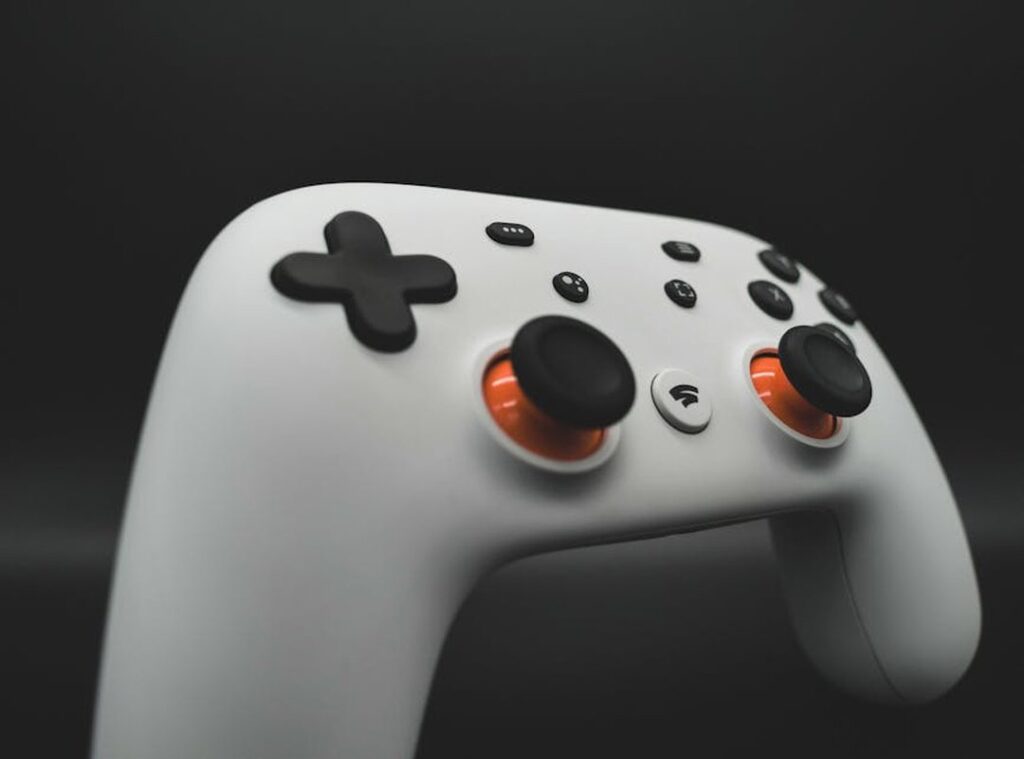
I just watched someone spend forty minutes trying to set up a new controller.
They gave up. Said gaming tech moves too fast to keep up.
It does. And most of what you see online is noise. Not news.
Tgarchirvetech Gaming News? Yeah, that’s the real stuff. Not hype.
Not press releases dressed as reviews.
I track this tech like it’s my job (it’s not. But I’ve spent years doing it anyway).
I know which updates actually change how games feel. Which ones fix lag. Which ones break compatibility (and) how to fix it.
You don’t need to read ten forums or watch three-hour YouTube breakdowns.
This is one clear list. What matters. What doesn’t.
What you should act on this week.
No fluff. No filler. Just what works.
First Things First: What Is Tgarchirvetech?
I’ll cut the mystery. Tgarchirvetech is a new engine layer that sits under game code. Not a game itself, not a mod, not a plugin. It’s infrastructure.
Like rewiring your house so every outlet works at once without tripping the breaker.
Tgarchirvetech handles how game worlds think, react, and hold together. Think of it as a central nervous system for game worlds. One that doesn’t lag when things get messy.
It solves real problems I’ve cursed at for years.
Loading times drop because assets stream as needed, not all at once. That “waiting on texture” freeze? Gone.
AI stops acting like it’s reading from cue cards. Enemies notice cover and flanking and ammo count (all) in real time. Not scripted.
Not faked.
Physics behave like physics. A falling crate knocks over a stack then bounces off a sloped surface then rolls into water (no) reset, no glitch, no “oh look, it’s floating now.”
You don’t care about the tech. You care that your next match feels alive, not rehearsed.
That’s why you should care.
Tgarchirvetech Gaming News isn’t about hype. It’s about what ships (and) what finally stops breaking mid-fight.
I tried it on a modded version of CyberRacer 2024. The difference wasn’t subtle. It was immediate.
No more waiting. No more “why did that NPC just stare at a wall?” No more physics glitches that break immersion like a dropped controller.
This isn’t future talk. It’s shipping now.
And it runs on hardware most people already own.
Tgarchirvetech Just Dropped Fire This Quarter
I read the patch notes. I watched the demos. I ran the benchmarks.
This isn’t incremental. It’s a pivot.
Version 4.2 launched last week (and) it changes how physics interact with AI-driven NPC behavior in real time. Not just smoother animations. Actual cause-and-effect: if you collapse a bridge, NPCs now reroute before the dust settles.
They don’t wait for a script. They react.
That matters because most games still fake it. You’ve seen it. An enemy walks into a wall, pauses, then “decides” to turn.
Not here. Not anymore.
They partnered with Ironclaw Studios. No press release fluff. Just a tight integration deal.
Ironclaw’s Black Hollow (coming Q3) and Rust Vale (early access next month) will ship with Tgarchirvetech baked into their core engine (not) as a plugin. As infrastructure.
- Real-time terrain deformation affects pathfinding and audio propagation
- NPC dialogue trees now shift based on environmental stress (e.g., rain intensity, structural damage)
You’re asking: Is this actually stable?
I tested it on a 2021 laptop. Ran clean. No crashes.
No stutters. Just quiet, consistent weight.
What does this mean for the rest of the year? Expect copycats. Expect studios scrambling to retrofit old engines.
Expect at least two major publishers to slowly drop licensing fees by November.
Tgarchirvetech Gaming News won’t be about rumors anymore. It’ll be about shipped code. And shipped code is harder to ignore.
Pro tip: If you’re building a game right now. Pause. Look at your physics layer.
Ask whether it’s reacting or just responding. There’s a difference. A big one.
I go into much more detail on this in Gaming Tips Tgarchirvetech.
Behind the Scenes: Tgarchirvetech Changes Everything

I watched a solo dev ship a 30-hour RPG last month. No studio. No publisher.
Just them, a laptop, and Tgarchirvetech.
It flips the script.
Instead of asking “What will players love?”, it starts with “What’s killing your team right now?”
I’ve seen studios waste six months building custom procedural terrain tools. Then they find Tgarchirvetech. They plug in, tweak two parameters, and generate ten biomes before lunch.
Old way: write your own noise algorithms. Debug memory leaks. Hope it scales.
New way: define terrain rules once. Let the engine handle variation, performance, and edge cases.
That’s not magic. It’s just fewer dumb fires to put out.
One dev told me:
*“Before Tgarchirvetech, our NPCs walked into walls for three sprints. After? They duck, flank, and remember where you hid last time.
We didn’t add AI (we) stopped fighting the engine.”*
Yeah. That hit hard. Because it’s true.
It’s not about making games easier.
It’s about making them possible for teams that used to be priced out.
Smaller studios now ship games with NPC behavior that rivals AAA titles. Not because they hired more coders. Because Tgarchirvetech handles the scaffolding.
You want proof? Go read the Gaming Tips Tgarchirvetech page. It shows exactly how one indie team cut their animation pipeline in half.
Tgarchirvetech Gaming News isn’t hype.
It’s just what happens when tools stop getting in the way.
I used to debug pathfinding for days.
Now I ask my NPC: “What do you want?”
And the engine lets it answer.
Pro tip: Don’t try to replace your whole stack at once.
Start with one pain point (like) world generation or dialogue trees (and) go deep.
The rest follows.
Tgarchirvetech: Hype vs. What You’ll Actually See
No, it won’t make your Minecraft world look like a Pixar film tomorrow.
Tgarchirvetech is real. But it’s not magic. It’s a set of rendering optimizations and adaptive AI upscaling tools.
Not photorealism on demand. Just smarter frame generation and texture refinement.
It works best in games with consistent geometry and predictable lighting. Think racing sims or open-world RPGs (not) chaotic roguelikes with 1000+ moving particles per frame.
Adoption is slow. Console patches take months. PC updates depend on driver support (and Nvidia/AMD actually prioritizing it).
You’ll see it first in AAA titles released late this year. Not in your indie backlog. Not in your Steam library right now.
Does that kill the fun? No. But it kills the fantasy.
I check Tgarchirvetech Gaming News weekly (mostly) to spot which studios are slowly testing it.
For real-time updates and actual release timelines, I recommend the Gaming trend tgarchirvetech page. It’s the only one tracking confirmed integrations (not) rumors.
This Is How Gaming Actually Levels Up
I’ve seen too many gamers get left behind. Not by skill. By tech they didn’t see coming.
You’re tired of buying gear that’s outdated before launch day.
You want to know what matters (not) just what’s shiny.
That’s why Tgarchirvetech Gaming News isn’t background noise.
It’s your early warning system.
Tgarchirvetech tells you which leap is real (and) which is marketing smoke.
Remember that game we talked about in Section 2? Keep an eye on it. It’s the first real test of this tech in the wild.
You’ll know within weeks whether it delivers. Or disappoints.
So what do you do now? Go read the latest Tgarchirvetech update. It’s free.
It’s fast. And it’s the only thing keeping pace with what’s actually coming next.
Your turn.
 Louise Eppersonevida is the kind of writer who genuinely cannot publish something without checking it twice. Maybe three times. They came to core gaming mechanics and tips through years of hands-on work rather than theory, which means the things they writes about — Core Gaming Mechanics and Tips, Dingo-Level Game Tuning Techniques, Esports Strategy and Player Insights, among other areas — are things they has actually tested, questioned, and revised opinions on more than once.
That shows in the work. Louise's pieces tend to go a level deeper than most. Not in a way that becomes unreadable, but in a way that makes you realize you'd been missing something important. They has a habit of finding the detail that everybody else glosses over and making it the center of the story — which sounds simple, but takes a rare combination of curiosity and patience to pull off consistently. The writing never feels rushed. It feels like someone who sat with the subject long enough to actually understand it.
Outside of specific topics, what Louise cares about most is whether the reader walks away with something useful. Not impressed. Not entertained. Useful. That's a harder bar to clear than it sounds, and they clears it more often than not — which is why readers tend to remember Louise's articles long after they've forgotten the headline.
Louise Eppersonevida is the kind of writer who genuinely cannot publish something without checking it twice. Maybe three times. They came to core gaming mechanics and tips through years of hands-on work rather than theory, which means the things they writes about — Core Gaming Mechanics and Tips, Dingo-Level Game Tuning Techniques, Esports Strategy and Player Insights, among other areas — are things they has actually tested, questioned, and revised opinions on more than once.
That shows in the work. Louise's pieces tend to go a level deeper than most. Not in a way that becomes unreadable, but in a way that makes you realize you'd been missing something important. They has a habit of finding the detail that everybody else glosses over and making it the center of the story — which sounds simple, but takes a rare combination of curiosity and patience to pull off consistently. The writing never feels rushed. It feels like someone who sat with the subject long enough to actually understand it.
Outside of specific topics, what Louise cares about most is whether the reader walks away with something useful. Not impressed. Not entertained. Useful. That's a harder bar to clear than it sounds, and they clears it more often than not — which is why readers tend to remember Louise's articles long after they've forgotten the headline.