

You’ve hit a wall. No matter how many matches you grind, your rank barely moves and your performance feels inconsistent. The problem isn’t effort—it’s direction. This guide shows you how to break through plateaus with a structured gaming skill training routine designed to target weaknesses, sharpen mechanics, and build repeatable performance under pressure. We’ve analyzed proven esports practice frameworks and performance psychology principles used by competitive players to turn raw playtime into measurable improvement. Inside, you’ll learn how to replace mindless repetition with deliberate drills, focused review, and optimized sessions that unlock steady, trackable progress.
Beyond Grinding: The Science of Deliberate Practice
Mindless grinding is gaming on autopilot—queue, spawn, repeat (and maybe rage a little). Deliberate practice, by contrast, is structured, goal-oriented training designed to improve a specific skill through focused effort and feedback. In other words, it’s the difference between “I played for six hours” and “I fixed my terrible crosshair placement.”
Instead of vaguely trying to “get better,” you isolate a micro-skill (a small, measurable component of performance). An FPS player might drill vertical flick shots on one map. A MOBA player might practice last-hitting under tower for 20 straight minutes. That’s a gaming skill training routine—not just vibes.
Some argue that more matches equal more improvement. And sure, experience matters. But research on deliberate practice shows targeted repetition with feedback accelerates skill acquisition far more effectively than passive repetition (Ericsson et al., 1993). Translation: playing mindlessly is like doing push-ups with bad form—you’re sweating, but are you stronger?
This method works because it forces discomfort. You analyze mistakes in real time, adjust immediately, and reinforce stronger neural pathways—a process called myelination, where repeated precision makes actions faster and more automatic.
Pro tip: Record one match a week and critique just one mistake pattern. Yes, it’s awkward. Growth usually is.
Architecting Your Training Plan: The Four Pillars of Improvement
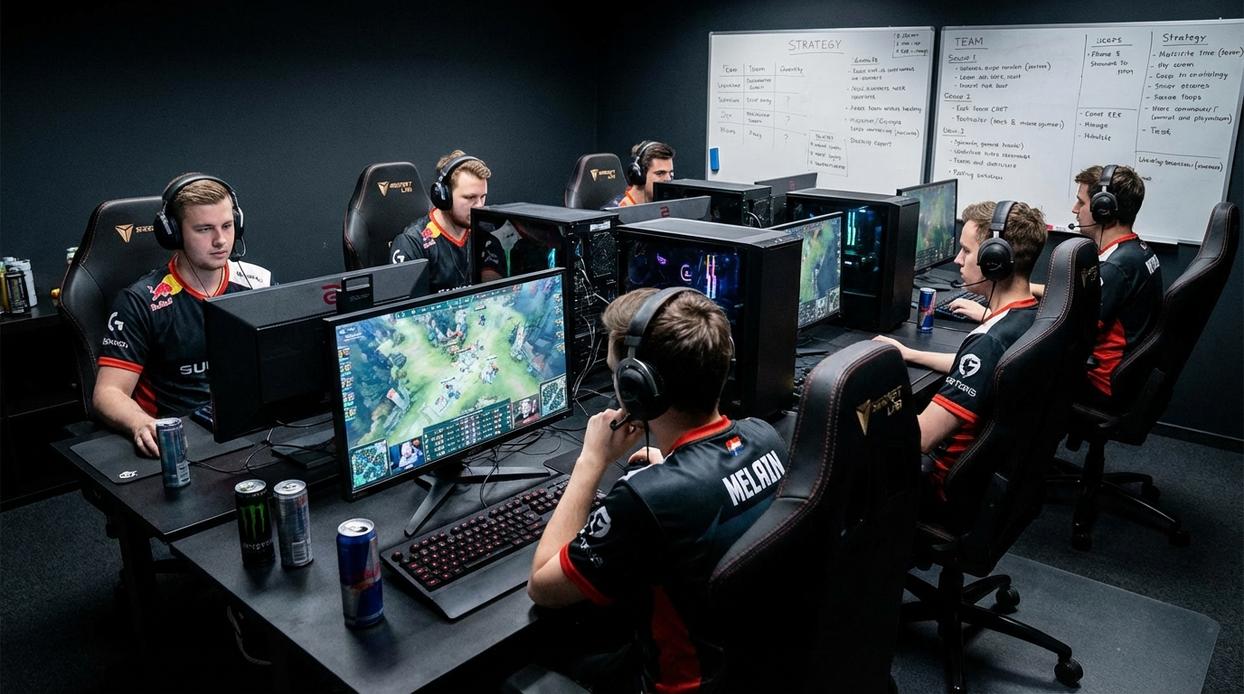
If you want consistent rank-ups instead of random pop-off games, you need structure. A real gaming skill training routine isn’t about grinding harder—it’s about training smarter. Here’s what I recommend focusing on.
-
Mechanical Skill Drills
Mechanical skill means your raw execution—aim, timing, movement, input precision. If you play FPS titles, schedule 20–30 minutes in aim trainers like KovaaK’s or Aim Lab before queueing. Fighting game players should rehearse combos and block strings until they’re automatic. MOBA and RTS competitors should isolate skill-shot practice or unit control micro. Treat this like scales on a piano (yes, even pros do it). -
VOD Review & Analysis
This is where most players slack—and where you’ll gain the edge. Record your matches and review your mistakes, not your highlights. Ask: Was that death caused by poor positioning? Cooldown mismanagement? Greed? Be clinical. Improvement lives in uncomfortable footage.
If you can’t explain why you lost a fight, you can’t prevent it next time.
-
Theory & Strategy Study
Execution without understanding is chaos. Study patch notes, meta shifts, and pro gameplay. Define the meta (most effective tactics available) for your current patch and adapt. Watch high-level streams with intent—pause and predict decisions before they happen. Then compare. -
Performance & Wellness
Your brain is hardware. Sleep, hydration, and breaks directly impact reaction time and decision-making (Walker, 2017). I strongly recommend stopping ranked sessions when tilted. Thirty focused minutes beat three sloppy hours.
Some argue that “just playing more” is enough. Volume does matter—but without structure, you reinforce bad habits. Deliberate practice, as psychologist K. Anders Ericsson’s research shows, drives elite performance—not repetition alone (Ericsson et al., 1993).
Follow these pillars consistently, and you won’t just play more—you’ll improve with intent.
Your Weekly Blueprint for Peak Performance
Most players think grinding six hours a day is the answer. It’s not. Consistency beats intensity almost every time. A focused, repeatable gaming skill training routine will outperform a chaotic marathon session you quit by Wednesday (yes, we’ve all been there).
Here’s a smarter template:
Monday: Mechanical warm-up (30 mins), ranked play (2 hours), VOD review of one loss (30 mins).
Tuesday: Theory study (1 hour—pro guide or match analysis), unranked practice (1 hour—apply one new concept).
Wednesday: Mechanical warm-up (30 mins), ranked (2 hours), VOD review (30 mins).
Thursday: Rest day or light theory.
Friday: Mechanical warm-up (30 mins), team scrims (2 hours), team VOD review (1 hour).
Some argue you should “just play more ranked” because real pressure builds skill. I disagree. Ranked without reflection is like going to the gym and skipping recovery—you’re just reinforcing bad form. Reviewing mistakes, especially using frameworks from guides like how to analyze your own gameplay like a coach, accelerates improvement.
Adjust based on weaknesses. Poor aim? Increase drills. Bad decisions? Double down on VODs.
Pro tip: Track one improvement metric per week. Small gains stack fast (ask any esports pro who climbed from obscurity to main stage).
Your performance ceiling is often defined by your setup, not your reflexes. Start with graphics: lowering shadows, post-processing, and anti-aliasing can boost FPS, reducing frame-time spikes and visual clutter. Higher and stable frames mean cleaner tracking and faster target acquisition. Dial mouse DPI and in-game sensitivity so a 180-degree turn feels instinctive; controller players should tune deadzones to eliminate drift without sacrificing micro-aim. Rebind keys for ergonomic access and prioritize wired peripherals to minimize input lag. Integrate these tweaks into your gaming skill training routine and measure results weekly. Milliseconds matter—optimize them, win more fights. Pro tip: benchmark regularly.
Your Path to the Next Rank Starts Now
You came here because you’re tired of feeling hard-stuck—and now you have a clear path forward. Ranking up isn’t about grinding endless matches; it’s about committing to a structured gaming skill training routine that targets your weaknesses with purpose. That frustration of hitting a skill ceiling? It fades when every session has intent.
Start small. Review one loss per day. Add focused mechanical drills. Build consistency through strategy study. That’s how real improvement compounds.
If you’re ready to break past your plateau, follow this system and take action today. Thousands of competitive players use these proven methods to climb—now it’s your turn. Start your first focused session now.
 Xendar Orrendale writes the kind of esports strategy and player insights content that people actually send to each other. Not because it's flashy or controversial, but because it's the sort of thing where you read it and immediately think of three people who need to see it. Xendar has a talent for identifying the questions that a lot of people have but haven't quite figured out how to articulate yet — and then answering them properly.
They covers a lot of ground: Esports Strategy and Player Insights, Hot Topics in Gaming, Platform Optimization Hacks, and plenty of adjacent territory that doesn't always get treated with the same seriousness. The consistency across all of it is a certain kind of respect for the reader. Xendar doesn't assume people are stupid, and they doesn't assume they know everything either. They writes for someone who is genuinely trying to figure something out — because that's usually who's actually reading. That assumption shapes everything from how they structures an explanation to how much background they includes before getting to the point.
Beyond the practical stuff, there's something in Xendar's writing that reflects a real investment in the subject — not performed enthusiasm, but the kind of sustained interest that produces insight over time. They has been paying attention to esports strategy and player insights long enough that they notices things a more casual observer would miss. That depth shows up in the work in ways that are hard to fake.
Xendar Orrendale writes the kind of esports strategy and player insights content that people actually send to each other. Not because it's flashy or controversial, but because it's the sort of thing where you read it and immediately think of three people who need to see it. Xendar has a talent for identifying the questions that a lot of people have but haven't quite figured out how to articulate yet — and then answering them properly.
They covers a lot of ground: Esports Strategy and Player Insights, Hot Topics in Gaming, Platform Optimization Hacks, and plenty of adjacent territory that doesn't always get treated with the same seriousness. The consistency across all of it is a certain kind of respect for the reader. Xendar doesn't assume people are stupid, and they doesn't assume they know everything either. They writes for someone who is genuinely trying to figure something out — because that's usually who's actually reading. That assumption shapes everything from how they structures an explanation to how much background they includes before getting to the point.
Beyond the practical stuff, there's something in Xendar's writing that reflects a real investment in the subject — not performed enthusiasm, but the kind of sustained interest that produces insight over time. They has been paying attention to esports strategy and player insights long enough that they notices things a more casual observer would miss. That depth shows up in the work in ways that are hard to fake.