
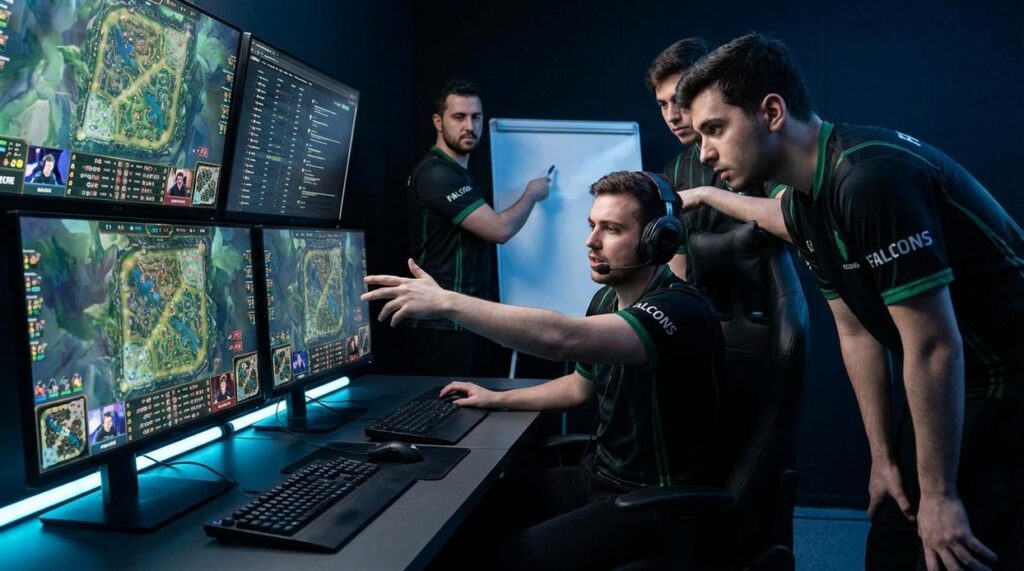
Gaming evolves fast—and if you’re not keeping up with the latest mechanics, strategies, and optimization techniques, you’re already behind. Whether you’re looking to sharpen your competitive edge, understand emerging esports trends, or fine-tune your setup for peak performance, this article delivers exactly what you’re searching for.
We break down today’s hottest gaming topics, from core gameplay mechanics that separate casual players from serious competitors to advanced tuning techniques that unlock smoother performance and faster response times. You’ll also discover actionable insights into esports team communication, strategic coordination, and platform optimization hacks that can instantly elevate your results.
Our insights are built on in-depth gameplay analysis, competitive match breakdowns, and proven performance strategies used across high-level play. Every tip and strategy shared here is practical, tested, and designed to help you win more consistently.
If your goal is smarter play, better coordination, and optimized performance, you’re in the right place.
Final map. Overtime. One player calls “rotate,” another hears “hold,” and in three chaotic seconds the championship slips away. It sounds dramatic, yet it happens more than we admit.
Talent and mechanics help, but unstructured comms sabotage contenders. I might be wrong about the exact percentage, however many coaches argue misalignment—not aim—is the real ceiling. In esports team communication, clarity beats volume.
So what’s the fix? Build a system: standardized callouts, defined shot-caller hierarchy, emotional reset cues, and post-round debrief loops. For tactical structure, see this breakdown.
Admittedly, no framework guarantees wins. Still, disciplined dialogue turns games into trophies.
The Language of Victory: Building Your Team’s Communication Protocol
For an in-depth look at how innovative communication technologies are revolutionizing teamwork in esports, be sure to check out the latest insights in the article “Tgarchirvetech News By Thegamingarchives.
In high-pressure matches, clarity beats chaos. A tight system always outperforms “vibes-based” comms (yes, that’s a thing). The difference between winning and watching the respawn screen often comes down to structure.
Standardizing Terminology
First, build a shared glossary. Standardizing terminology means agreeing on one name for every map location, ability, and strategy—no exceptions. A vs. B looks like this: one team says “over there by the box,” the other says “Top Mid Crate.” Guess which rotates faster?
Ambiguity wastes seconds. Seconds lose rounds. Pro teams document callouts for this reason—League of Legends squads, for example, pre-define jungle path names to avoid confusion during invades (Riot Games Esports broadcasts frequently highlight this practice).
The “Minimum Information” Rule
Next, apply the Minimum Information Rule: communicate who, what, where in as few words as possible. Compare:
- A: “I think someone might be near the stairs.”
- B: “Two pushing B stairs.”
Option B wins every time. It’s sharper, faster, and keeps comms clear during intense fights. In esports team communication, brevity preserves focus.
Pro tip: If a callout takes more than three seconds to say, trim it.
Role-Specific Callouts
Now compare undefined roles vs. defined responsibilities. When everyone calls everything, noise spikes. Instead:
- Support: Track enemy ultimates and cooldowns.
- Entry fragger: Call first contact and immediate threats.
- IGL: Confirm rotations and macro decisions.
Defined lanes reduce overlap (like giving everyone a mic but only one script).
Practical Drill
- Pick one map.
- Label every location together.
- Assign role-specific info duties.
- Run a scrim using only approved terms.
- Review VOD and refine.
Structure vs. spontaneity? Structure wins championships.
The Shot-Caller’s Playbook: Leading the Mid-Game Macro

Mid-game is where matches are won—or quietly thrown. The difference usually comes down to the IGL (In-Game Leader), the player responsible for making real-time strategic decisions. A great shot-caller blends mechanical understanding with emotional control. They process incomplete information, track cooldowns, and keep comms clear (yes, even when everything is on fire).
There are two primary leadership styles. Autocratic IGLs make fast, unilateral calls—no debate, just action. This works in high-chaos moments. Democratic IGLs invite quick input before deciding, which can improve buy-in and creativity. Critics argue democratic systems waste precious seconds. They can—unless your team practices structured esports team communication that limits responses to tight, relevant data.
The Chain of Command
Confusion kills tempo. Establish a clear hierarchy:
- IGL has final say.
- Secondary caller handles micro-adjustments (flank warnings, cooldown tracking).
- Specialists (AWP, lurker, support) provide concise, role-specific info.
When plans change mid-round, everyone defaults to the IGL immediately. NO SIDE CONVERSATIONS. No layered debates. Just execution.
Rotations and Objective Control
Call rotations with three elements: trigger, direction, and timing. Example: “Two spotted B, rotate A NOW, 10-second stack.” This keeps movement synchronized and prevents staggered arrivals (the esports equivalent of a horror movie split-up).
‘Dingo-Level’ Tuning
Advanced macro hinges on tempo control—intentionally speeding up or slowing down to disrupt opponents. Bait enemy ultimates with partial commits. Fake economy strength to force bad buys. Pro tip: track enemy spending patterns for three rounds before making a hard read.
Some argue over-calling restricts individual skill. The truth? Structure unlocks skill. Freedom without coordination is just ranked chaos.
Maintaining Composure Under Fire: Emotional Regulation and Tilt Control
Pressure doesn’t break teams—poor emotional regulation does. In high-stakes matches, frustration, blame, and panic can dismantle communication in seconds (yes, even faster than a bad ult). The benefit of mastering composure? Cleaner calls, smarter plays, and more wins over time.
The Enemy Within
Tilt—an emotional state where frustration overrides logic—shrinks decision-making capacity (American Psychological Association). When one player spirals, esports team communication fractures. The upside of controlling it is simple: you protect clarity when it matters most.
Code Words and Reset Phrases
Pre-agreed reset phrases like “Next round, clean slate” interrupt negativity loops. Think of them as a mental Alt+F4. Teams that reset faster recover momentum faster.
Pro tip: Keep phrases short and neutral—no sarcasm.
The ‘Hype’ Player vs. The ‘Calm’ Anchor
| Role | Strength | Benefit to Team |
|---|---|---|
| Hype Player | Energy boost |
Restores morale after losses |
| Calm Anchor | Emotional stability | Prevents overreactions |
Balancing both personalities stabilizes morale under pressure.
Post-Mistake Protocol
A simple framework: Acknowledge → Adjust → Advance.
“Missed the rotate. My bad. Next time faster flank.” No blame. No replay theater.
If you want deeper insight into elite composure, study analyzing pro player decision making under pressure. The reward? More consistency, fewer emotional collapses, and a measurable edge.
Winning a VOD review means looking beyond flashy plays and into your comms. Separate audio from gameplay and study it like a podcast; you’ll hear habits you miss mid-fight. This shift sharpens esports team communication and turns chaos into clarity.
Identify patterns: recurring info gaps, overtalking, or dead silence during clutch moments. When you spot trends, you can fix systems, not scapegoats.
Create structured feedback loops focused on solutions. Use specific examples and shared goals to keep trust high.
- Clearer calls
- Faster adaptations
The payoff? Cleaner executes, tighter rotations, and more wins under pressure and on stage consistently.
Your team’s communication system is a weapon; sharpen it like aim or mechanics. When comms are sloppy, rounds slip away and frustration builds. In esports team communication, chaos isn’t loud—it’s costly.
Instead, build a deliberate system:
- Standardize callouts for every map.
- Define mid-round decision authority.
- Reset emotional tone after each loss.
As a result, you’ll trade confusion for clarity, tilt for trust, and hesitation for decisive plays. (Yes, it feels awkward at first.)
So, in your next practice, lock in one map and formalize every callout. Small structure, big win equity. That’s how contenders separate themselves consistently.
Level Up Your Competitive Edge
You came here to sharpen your understanding of competitive gaming mechanics, smarter strategies, and the tweaks that separate casual players from serious contenders. Now you have a clearer roadmap.
Mastering core mechanics, refining dingo-level tuning techniques, and optimizing your platform setup aren’t optional anymore—they’re the difference between climbing the ranks and staying stuck. The biggest pain point most players face isn’t effort. It’s inefficiency. Wasted practice. Poor coordination. Missed optimization.
When you combine mechanical precision with strong esports team communication, you turn scattered talent into consistent wins. That’s how high-performing squads dominate brackets and solo players break through plateaus.
If you’re tired of underperforming despite putting in the hours, it’s time to upgrade your approach. Dive deeper into advanced strategies, apply these tuning techniques today, and start practicing with intention.
Serious players don’t leave improvement to chance—optimize your setup, refine your teamwork, and take control of your next win now.
 Louise Eppersonevida is the kind of writer who genuinely cannot publish something without checking it twice. Maybe three times. They came to core gaming mechanics and tips through years of hands-on work rather than theory, which means the things they writes about — Core Gaming Mechanics and Tips, Dingo-Level Game Tuning Techniques, Esports Strategy and Player Insights, among other areas — are things they has actually tested, questioned, and revised opinions on more than once.
That shows in the work. Louise's pieces tend to go a level deeper than most. Not in a way that becomes unreadable, but in a way that makes you realize you'd been missing something important. They has a habit of finding the detail that everybody else glosses over and making it the center of the story — which sounds simple, but takes a rare combination of curiosity and patience to pull off consistently. The writing never feels rushed. It feels like someone who sat with the subject long enough to actually understand it.
Outside of specific topics, what Louise cares about most is whether the reader walks away with something useful. Not impressed. Not entertained. Useful. That's a harder bar to clear than it sounds, and they clears it more often than not — which is why readers tend to remember Louise's articles long after they've forgotten the headline.
Louise Eppersonevida is the kind of writer who genuinely cannot publish something without checking it twice. Maybe three times. They came to core gaming mechanics and tips through years of hands-on work rather than theory, which means the things they writes about — Core Gaming Mechanics and Tips, Dingo-Level Game Tuning Techniques, Esports Strategy and Player Insights, among other areas — are things they has actually tested, questioned, and revised opinions on more than once.
That shows in the work. Louise's pieces tend to go a level deeper than most. Not in a way that becomes unreadable, but in a way that makes you realize you'd been missing something important. They has a habit of finding the detail that everybody else glosses over and making it the center of the story — which sounds simple, but takes a rare combination of curiosity and patience to pull off consistently. The writing never feels rushed. It feels like someone who sat with the subject long enough to actually understand it.
Outside of specific topics, what Louise cares about most is whether the reader walks away with something useful. Not impressed. Not entertained. Useful. That's a harder bar to clear than it sounds, and they clears it more often than not — which is why readers tend to remember Louise's articles long after they've forgotten the headline.