
Staying ahead in today’s competitive gaming landscape means understanding where the industry is headed—not where it’s been. If you’re searching for clear insights into gaming industry trends 2026, you likely want more than surface-level predictions. You want to know which mechanics are evolving, how esports strategies are shifting, what optimization techniques are gaining traction, and where real opportunities are emerging for players and competitors alike.
This article breaks down the most important developments shaping the next phase of gaming, from core gameplay innovations to high-level performance tuning and platform optimization shifts. We’ve analyzed current competitive data, emerging player behavior patterns, and technical advancements influencing both casual and professional play.
Whether you’re refining your strategy, optimizing your setup, or tracking the future direction of competitive gaming, this guide delivers focused, research-backed insights designed to help you stay ahead in 2026 and beyond.
The State of Play: What’s Next for Gaming in 2026?
Gaming isn’t just evolving—it’s respawning into something faster, sharper, and more demanding. New engines, AI-driven NPCs, cloud streaming, and competitive metas shift like a battle royale safe zone. The problem? With so many emerging tools, it’s hard to tell which upgrades are permanent skill trees and which are temporary buffs.
Based on deep dives into core mechanics, platform performance, and competitive strategy, this breakdown cuts through the noise. Think of it as patch notes for the future. We’ll focus on four forces defining gaming industry trends 2026—so you can play smarter, not just louder.
Beyond Scripts: The Rise of Generative AI in Game Worlds
For years, game AI mostly built assets—textures, side quests, background dialogue. Now it’s generating entire living worlds in real time. The shift is from prewritten scripts to systems that think, remember, and adapt. In short, we’re moving from theme parks to ecosystems.
Emergent gameplay (unscripted outcomes created by interacting systems) is the core breakthrough. Instead of NPCs looping canned dialogue, they retain memory, form opinions, and adjust behavior. Help a shopkeeper early on, and she may warn you about an ambush 20 hours later. Betray a faction, and rumors spread organically. Think less “dialogue tree,” more Westworld-style improvisation (minus the robot uprising, hopefully).
Some argue this unpredictability dilutes crafted storytelling. After all, tight scripts gave us unforgettable arcs in classics like The Last of Us. That’s fair. But dynamic AI doesn’t erase authored narratives—it layers on top of them, creating replayability and personalized stakes. According to multiple 2025–2026 developer surveys from GDC, studios cite adaptive AI as a pillar of gaming industry trends 2026.
These systems introduce new core mechanics:
- Social engineering (manipulating alliances through dialogue and reputation)
- Persuasion checks powered by contextual memory
- Fluid faction alliances that shift mid-campaign
- Resource economies influenced by NPC belief systems
Dingo-level tuning tip: Stress-test boundaries. Push NPC patience meters, revisit old lies, and attempt contradictory alliances. By intentionally creating tension spikes, you expose hidden narrative branches. Pro tip: track NPC memory triggers in a notebook—patterns reveal unlock conditions faster than random chaos.
The result? No two playthroughs alike—because the world isn’t waiting for you. It’s evolving with you.
Ubiquitous Play: How Cloud Gaming Finally Breaks Through
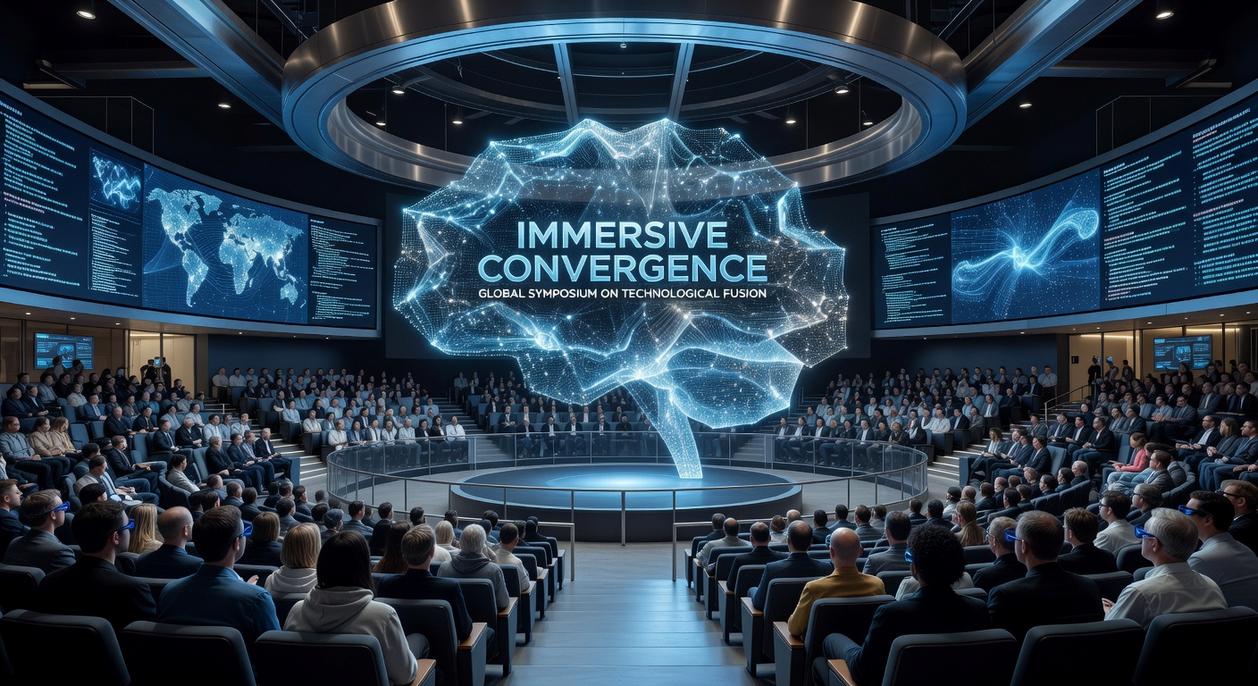
For years, cloud gaming was judged like a race car stuck in traffic—everyone obsessed over latency (the delay between input and action). But the real breakthrough isn’t shaving milliseconds. It’s ubiquitous play: the ability to launch a AAA title on a phone, TV, or low-end laptop as easily as opening Netflix.
Think of it like electricity. You don’t care where the power plant is—you just flip the switch. Cloud gaming turns hardware into a light switch.
Critics argue local PCs still deliver superior performance. True—native rigs offer control and offline access. But cloud-native games flip the script. These are titles built entirely for remote servers, with persistent worlds (always-running shared universes) and physics simulations too massive for consumer GPUs. Imagine thousands of players reshaping terrain in real time—like Minecraft on rocket fuel.
This shift mirrors broader gaming industry trends 2026, where access beats ownership.
| Feature | Local Hardware | Cloud-Native |
|---|---|---|
| Processing Power | Limited to device |
Scales in data centers |
| World Persistence | Session-based | Always online |
| Upgrade Costs | User-funded | Server-side |
Platform Optimization Hack: Enable QoS (Quality of Service) on your router to prioritize gaming traffic and reduce jitter. (Pro tip: use wired Ethernet whenever possible.)
As explored in how ai is transforming modern video games, server-side intelligence amplifies this model further.
High-end gaming is no longer a gated community—it’s becoming public infrastructure.
The New Arena: Hyper-Personalization in Esports
Esports is entering a new phase where talent alone isn’t enough. Now, artificial intelligence is building hyper-personalized training systems that analyze biometrics (heart rate variability, stress spikes), reaction times, and decision-making patterns in real time. In other words, your gameplay data becomes a living blueprint for improvement. Instead of generic aim drills, AI-driven coaching tools generate custom regimens based on micro-mistakes—like overcommitting in late-round scenarios or hesitating under pressure.
Some critics argue this levels the playing field too much. If everyone has AI, where’s the edge? Fair question. However, the advantage no one’s talking about lies in interpretation. Raw data is common; strategic adaptation is rare. Top teams are already using predictive models to simulate opponents’ tendencies, exposing AI-identified weaknesses before match day (think Moneyball, but with headshots).
At the same time, viewer-integrated formats are reshaping competition. Audiences can influence match modifiers, fund in-game events, or vote on map dynamics in real time. This isn’t a gimmick—it’s aligning with broader gaming industry trends 2026 focused on interactivity and monetized engagement loops.
For aspiring pros, the opportunity is even bigger. You don’t need a million-dollar facility. With publicly available match data and basic machine learning tools, you can:
- Track your decision latency in clutch moments
- Compare positioning heatmaps against top-tier players
- Build scenario-based improvement cycles
Pro tip: focus on one measurable weakness per week (stacking improvements compounds faster than grinding aim endlessly).
Ultimately, hyper-personalization isn’t replacing skill—it’s refining it. And in a scene where milliseconds decide championships, refinement is everything.
Feeling the Game: The Next Leap in Sensory Feedback
Controller rumble was cute; today’s haptic suits deliver localized force feedback, meaning motors map sensation to specific body zones. In practice, that lets you feel recoil in your shoulder or rain across your back (yes, it’s wild). Meanwhile, advanced spatial audio uses object-based sound to position footsteps within a 3D sphere, while temperature modules simulate heat from explosions or icy wind.
So how do you tune it for a competitive edge?
First, run your suit’s calibration tool and lower global intensity to 70 percent to prevent sensory overload. Next, boost low-frequency channels tied to footsteps by 10 to 15 percent; in battle royale titles, that makes enemy rotations easier to track. Then sync spatial audio with your haptics by matching directional sensitivity sliders. Finally, test in a private match and log reactions.
As gaming industry trends 2026 show, immersion equals information.
Your Next Move
Gaming in 2026 will be smarter, more accessible, personalized, and immersive. Miss that shift, and you’re buffering while others dominate (lag is not a strategy).
- Leverage AI-driven tools.
- Optimize for cloud latency.
- Track gaming industry trends 2026.
Start experimenting now—future-ready players win today.
As we explore the top gaming trends shaping the industry in 2026, understanding how to leverage emerging gameplay mechanics, such as those featured in ‘How To Play Lcfgamevent,’ can give players a competitive edge in the evolving landscape.
Level Up Your Next Move
You came here to understand where the market is heading and how to stay competitive in a rapidly evolving space. Now you have a clearer view of gaming industry trends 2026, the mechanics shaping player behavior, and the strategies that separate casual participation from serious performance.
The reality is this: falling behind on trends, tuning techniques, and optimization hacks means losing visibility, engagement, and revenue. In a space that moves this fast, hesitation costs growth.
Take action today. Apply these insights, refine your strategy, and start optimizing your gameplay or platform with precision. Thousands of competitive players and creators already rely on proven, data-backed gaming insights to stay ahead.
Don’t wait for the meta to shift without you. Level up your strategy now and turn today’s knowledge into tomorrow’s advantage.
 Louise Eppersonevida is the kind of writer who genuinely cannot publish something without checking it twice. Maybe three times. They came to core gaming mechanics and tips through years of hands-on work rather than theory, which means the things they writes about — Core Gaming Mechanics and Tips, Dingo-Level Game Tuning Techniques, Esports Strategy and Player Insights, among other areas — are things they has actually tested, questioned, and revised opinions on more than once.
That shows in the work. Louise's pieces tend to go a level deeper than most. Not in a way that becomes unreadable, but in a way that makes you realize you'd been missing something important. They has a habit of finding the detail that everybody else glosses over and making it the center of the story — which sounds simple, but takes a rare combination of curiosity and patience to pull off consistently. The writing never feels rushed. It feels like someone who sat with the subject long enough to actually understand it.
Outside of specific topics, what Louise cares about most is whether the reader walks away with something useful. Not impressed. Not entertained. Useful. That's a harder bar to clear than it sounds, and they clears it more often than not — which is why readers tend to remember Louise's articles long after they've forgotten the headline.
Louise Eppersonevida is the kind of writer who genuinely cannot publish something without checking it twice. Maybe three times. They came to core gaming mechanics and tips through years of hands-on work rather than theory, which means the things they writes about — Core Gaming Mechanics and Tips, Dingo-Level Game Tuning Techniques, Esports Strategy and Player Insights, among other areas — are things they has actually tested, questioned, and revised opinions on more than once.
That shows in the work. Louise's pieces tend to go a level deeper than most. Not in a way that becomes unreadable, but in a way that makes you realize you'd been missing something important. They has a habit of finding the detail that everybody else glosses over and making it the center of the story — which sounds simple, but takes a rare combination of curiosity and patience to pull off consistently. The writing never feels rushed. It feels like someone who sat with the subject long enough to actually understand it.
Outside of specific topics, what Louise cares about most is whether the reader walks away with something useful. Not impressed. Not entertained. Useful. That's a harder bar to clear than it sounds, and they clears it more often than not — which is why readers tend to remember Louise's articles long after they've forgotten the headline.